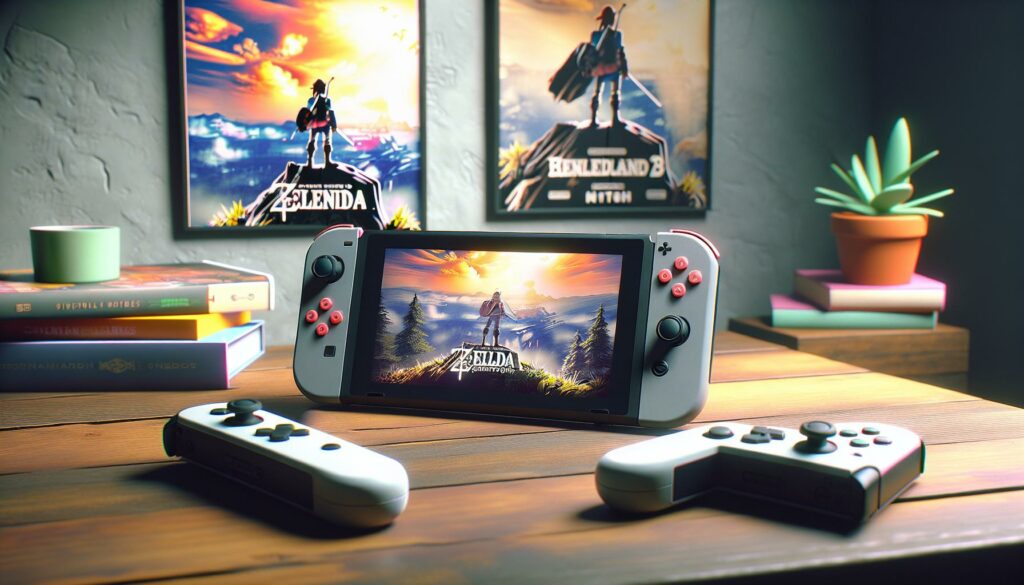
If you’ve ever searched for a way to play retro Nintendo games or wondered what people mean when they talk about “Nintendo Switch ROMs” or “NSP files,” you’ve probably hit a wall of confusing terminology and conflicting information. The world of game emulation can feel like a minefield, part technical curiosity, part legal gray zone, and entirely misunderstood by mainstream media. This guide cuts through the noise and explores what Nintendo Switch ROMs actually are, how they work, why they’re legally controversial, and what your legitimate options are as a gamer in 2026. Whether you’re interested in preserving gaming history, understanding emulation technology, or just looking for affordable ways to expand your library, we’ll cover all the angles without judgment and with full transparency about the trade-offs you’ll face.
Key Takeaways
- Nintendo Switch ROMs are digital copies of games in formats like NSP, XCI, and NCA files that can be played through emulators or modified consoles, but copying and distributing them without permission constitutes copyright infringement regardless of your intentions.
- ROM usage operates in a legal gray zone where distribution is clearly illegal in most jurisdictions, downloaders face lower enforcement priority but still technical risk, and Nintendo actively pursues high-profile targets while maintaining aggressive enforcement policies.
- Legitimate alternatives like Nintendo Switch Online ($20-50/year), official eShop purchases, used games, and free indie titles provide legal ways to access games without the security, compatibility, or ethical concerns associated with Nintendo Switch ROM downloads.
- While game preservation is a valid concern as titles disappear from digital storefronts, downloading free copies for personal use isn’t archival—real preservation requires institutional support and documentation, not individual downloads.
- If you choose to use emulation despite the risks, protect yourself by downloading from trusted sources like GitHub and Nexus Mods, using updated antivirus software, employing a VPN, and never distributing files to others.
What Are Nintendo Switch ROMs?
A ROM (Read-Only Memory) file is essentially a digital copy of a game’s data extracted from the original cartridge or source code. Think of it like photocopying a physical game, except the copy is a binary file stored on your computer or device. For Nintendo Switch games specifically, ROMs can be in different formats. The most common ones you’ll encounter are NSP files (Nintendo Submission Package), XCI files (which mimic physical cartridges), and NCA files (the actual game content containers).
When people casually mention “Nintendo Switch nsp files” or “Nintendo Switch nsp downloads,” they’re usually referring to these packaged game files that can be played through emulators or custom firmware. An NSP is essentially Nintendo’s own package format for games, it’s what Nintendo uses internally, which makes it particularly controversial because it’s technically the exact format the company uses to distribute games through the eShop.
The appeal is straightforward: a ROM file lets you play a game without owning the cartridge. You download it, install it on an emulator or modded console, and you can play. No disc drive, no cartridge, no physical clutter. For retro gamers, it’s efficient. For collectors, it’s archival. For budget-conscious players, it’s tempting.
How ROMs Work With Nintendo Switch Games
The actual mechanics are interesting. When you download what’s advertised as “Nintendo Switch roms free download,” you’re getting a file that contains the compiled game code, assets (graphics, sound), and metadata. Emulators like yuzu or Ryujinx read this file and translate the Switch’s proprietary hardware instructions into code your PC can understand and execute.
For NSP files specifically, they’re not encrypted in the same way cartridges are, or at least, decryption keys are widely available. This means anyone with a copy of an NSP and the right software can run it without needing the original hardware validation. That’s partly why NSPs are so prevalent in ROM-sharing communities compared to other formats.
When you install an NSP on a modded Switch, the console treats it exactly like a legitimate eShop download. It shows up in your library, you can launch it, play it, and accumulate playtime. Performance varies depending on the game, your hardware, and the specific emulator version, but modern emulators handle most Switch titles surprisingly well, often better than the console itself does with complex games that push performance boundaries.
The Legal Landscape of Nintendo Switch ROM Usage
Before going any further: this is the section that determines whether ROM usage is feasible for you. Spoiler alert, it’s complicated, and complexity is Nintendo’s favorite legal weapon.
Copyright and Intellectual Property Concerns
Nintendo doesn’t own just the games, they own the code, the art assets, the music, the entire creative work. When you download a ROM, you’re copying that entire work without permission or license. From a pure intellectual property standpoint, this is textbook copyright infringement. Nintendo’s legal team views it the same way they view piracy, because legally speaking, it is piracy in most jurisdictions.
The “I’m just preserving games” or “I own the cartridge, so I should be able to download the ROM” arguments sound reasonable to gamers, but they don’t hold legal weight. Copyright law doesn’t care about your intentions. Ownership of physical media doesn’t grant you the right to own the digital copy. You’re paying for a license to use the game, not ownership of the underlying intellectual property.
Most countries’ copyright laws (US, UK, EU) treat ROM distribution and possession the same way. Downloading isn’t technically illegal in every jurisdiction, some countries have loopholes, but distributing ROMs absolutely is. The moment someone uploads a “free download” link, they’re committing a crime. When you download it, you might be in the clear depending on local law, but you’re still in a gray area at best.
Nintendo’s Official Stance and Enforcement
Nintendo doesn’t mess around. The company has shut down emulators (they pressured the yuzu project so hard the developers abandoned it), sent cease-and-desist letters to ROM sites, and pursued legal action against repeat offenders. In 2020, they settled a lawsuit against ROM-sharing sites for millions of dollars. That pattern continues through 2026.
Their position is absolute: ROMs are piracy, and they’ll defend their intellectual property aggressively. If you’re distributing them, expect legal consequences. If you’re just downloading, you’re lower priority, but that doesn’t mean you’re safe, Nintendo could theoretically pursue individual downloaders if they wanted to make a statement.
That said, Nintendo’s enforcement focuses mainly on high-profile targets and active distribution networks. Casual players flying under the radar rarely face direct consequences. But “rarely” isn’t “never,” and the legal risk always exists. You’re gambling with potentially significant fines and legal fees.
Understanding Emulation vs. ROM Files
Here’s where people get confused: emulation and ROMs are two entirely different things, and treating them the same way is a mistake that trips up a lot of newcomers.
What Is Emulation Technology?
Emulation is the software that lets your PC or device act like Nintendo Switch hardware. Think of it as a translator. Your PC’s processor speaks x86 assembly: the Switch speaks ARM. An emulator bridges that gap, converting ARM instructions into x86 equivalents so your CPU can execute them.
Emulation technology itself isn’t illegal, it’s just code that simulates hardware behavior. Companies use emulators for everything from cross-platform development to testing. The legality gets murky only when you combine emulation with copyrighted games.
Emulators like yuzu, Ryujinx, and Dolphin are open-source projects maintained by enthusiasts. They’re not inherently designed for piracy, they’re designed to run game software. A skilled developer could theoretically build an emulator for legitimate purposes. In practice, most people use them to play ROMs, which clouds the legal waters.
The Role of ROMs in Emulation
ROMs are the fuel. Without them, an emulator is a hollow shell. The emulator provides the engine: the ROM provides the game. Technically, you could own legitimate copies of games and ROMs and use them together legally in some interpretations of fair use, but that’s not how courts usually rule.
Nintendo has been clear that even emulation combined with game files they own and distribute is infringing. They don’t distinguish between “I downloaded the ROM illegally” and “I extracted the ROM from my own cartridge myself.” If it’s a Switch game they make, they want revenue from it, and emulation circumvents that revenue stream.
The relationship between emulator and ROM is symbiotic and inseparable in practice, which is why pursuing one (the ROM) is Nintendo’s strategy rather than pursuing the emulation tools themselves.
Legal Alternatives to Playing Nintendo Switch Games
If you want to play Nintendo Switch games without legal ambiguity, you’ve got options. They cost money, but they exist, and they’re worth considering.
Nintendo Switch Online Subscription Service
Is Nintendo Switch Online worth it? That’s the first question serious players ask. The answer depends on what you want to play.
Nintendo Switch Online gives you access to a library of classic NES and SNES games, not new Switch releases, but foundational titles. For $20 a year (basic plan), you get online multiplayer and cloud saves. The Expansion Pack ($50/year) adds N64 and Gameboy games plus DLC for select titles like Mario Kart 8 Deluxe and Animal Crossing.
The game library is curated, which means it’s missing a lot of classics. But what’s there is legitimate, playable offline, and you’re supporting developers. It’s not a replacement for owning individual games, but it’s a legal way to experience retro Nintendo without ROMs.
Purchasing Games Through Official Channels
If you want specific Switch games, buying them is the obvious path. Physical cartridges, eShop downloads, or even used copies from GameStop and Amazon are all legitimate. Prices vary wildly, new AAA titles run $50-60, but Nintendo frequently discounts older titles. Indies might be $5-20.
Used games are an interesting middle ground. You’re buying from someone who already owns it, so Nintendo doesn’t see the sale directly. But it’s 100% legal and supports the secondhand market. If you’re patient, you can build a solid library this way for a fraction of new prices.
The eShop frequently has sales. Sign up for price tracking on sites like Nintendo Life to catch deals on games you’re watching.
Free and Indie Games on the eShop
The eShop has a legitimate free-to-play section. Games like Fortnite, Warframe, Pokémon Unite, and countless indie titles are free to download and play. They’re fully legitimate, and many are genuinely good.
Indie games in particular are where you’ll find the most creative, unique experiences on Switch. Titles like Hollow Knight, Celeste, and Hades started as indie projects and offer hundreds of hours of gameplay for $10-20. The indie scene is thriving, and supporting these developers directly is more ethical and often more rewarding than chasing AAA titles.
Preserving Gaming History: The ROM Debate
There’s a legitimate argument about game preservation that deserves serious consideration, even if it doesn’t change the legality of ROM usage.
Gaming Preservation and Archival Arguments
Gamers have a point: games get delisted from digital storefronts. When publishers pull games from the eShop, they vanish. Future generations might never experience them. Licensed games with expired music or character rights disappear forever. Once the servers shut down, online-dependent games become unplayable. This is a real problem.
Librarians, archivists, and even some game developers acknowledge that ROMs serve a preservation function. The Library of Congress has argued that game preservation should fall under fair use protections, but that hasn’t become law. Meanwhile, games keep vanishing from digital storefronts, and ROM archives are sometimes the only way to access them years later.
Nintendo’s position makes this worse. By shutting down emulation projects and ROM sites, they’re actively preventing preservation efforts. If they’d cooperate with archivists or allow preservation-focused ROM distribution, this argument would evaporate. Instead, they protect their IP at the expense of cultural history.
Community-Driven Preservation Efforts
Organizations like the Video Game History Foundation and Internet Archive are working on legitimate preservation, but they’re fighting uphill. Some developers quietly support community archival efforts because they recognize the problem. Others, particularly indie developers, explicitly allow ROMs of their games for preservation purposes.
The most honest take: preservation is a valid concern, but downloading free copies for yourself isn’t preservation, it’s personal use dressed up as activism. Real preservation requires institutional efforts, metadata, documentation, and long-term curation. If you genuinely care about preservation, support organizations doing that work rather than justifying personal downloads as historical archival.
Making Informed Decisions About ROM Usage
This is where you weigh personal choice against legal and ethical considerations. We’re not here to judge, but to give you the facts.
Weighing Legal, Ethical, and Practical Considerations
Here’s the honest breakdown:
Legal risk: Downloading is lower-priority than distributing, but it’s technically infringement in most places. The risk of personal consequences is low but real. Depends on your jurisdiction and risk tolerance.
Ethical angle: You’re using a product without compensating creators. Indie developers especially depend on sales. AAA publishers are less sympathetic, but the principle applies. If you can afford to buy the game, that’s the ethical choice.
Practical reality: Emulation works well for many titles but has compatibility issues. Performance varies. You might spend hours troubleshooting and still have bugs. Official versions just work.
Storage and security: ROMs from sketchy sites might come with malware or bloatware. Emulators hosted on unofficial mirrors could be compromised. The convenience advantage shrinks when you’re paranoid about your system security.
If you’re going to use ROMs even though the legal concerns, at least be smart about it. Use established, well-known emulators from GitHub or official repositories. Download from trusted community sources. Run antivirus. Use a VPN if your ISP monitors traffic. Don’t distribute them. Use them for games that are genuinely unavailable or have been delisted.
Protecting Your System and Data When Downloading
If you’ve decided to download game files from the internet, basic security hygiene is non-negotiable. ROMs themselves are usually safe, they’re just game files, but the ecosystem around them is sketchy.
Download only from communities with active moderation like Nexus Mods, which has established trust and community oversight. Avoid random rapidshare links or suspicious torrents. Use reputable VPN services if you’re concerned about ISP monitoring. Keep your antivirus updated and run scans on downloaded files before opening them.
Better yet: track release dates and news from legitimate sources like VGC to find when games go on sale, get delisted, or become available through official means. Often, waiting a month for a sale is safer, cheaper, and easier than hunting for files.
Consider your storage situation too. How to free up space on Nintendo Switch becomes a real problem when you’re managing hundreds of downloaded game files. The convenience advantage disappears when your device is constantly out of storage.
Conclusion
Nintendo Switch ROMs exist, they’re accessible, and they work, but they come with legal, ethical, and practical trade-offs you need to understand before diving in. The technical curiosity is real, the preservation argument has merit, but neither changes the legal reality: ROM distribution is piracy, and Nintendo will defend their IP aggressively.
Your best move is knowing your options. Nintendo Switch Online gives you legitimate access to retro games. The eShop has sales and free titles constantly. Physical and used games exist. If a game genuinely interests you, these paths are usually faster, safer, and legally clear than hunting for downloads.
If you’ve already made your decision about emulation, do it smartly. Understand the risks, protect your system, and at minimum support developers whose work you actually care about through legitimate purchases when you can. The gaming industry isn’t perfect, but creators deserve compensation for their work.
The goal isn’t to shame you into compliance, it’s to give you accurate information so you can make decisions that align with your values, risk tolerance, and circumstances. Choose wisely.